

By Bill Vogrin on March 11, 2023
Work began at an early age for me and has been a constant in my life.
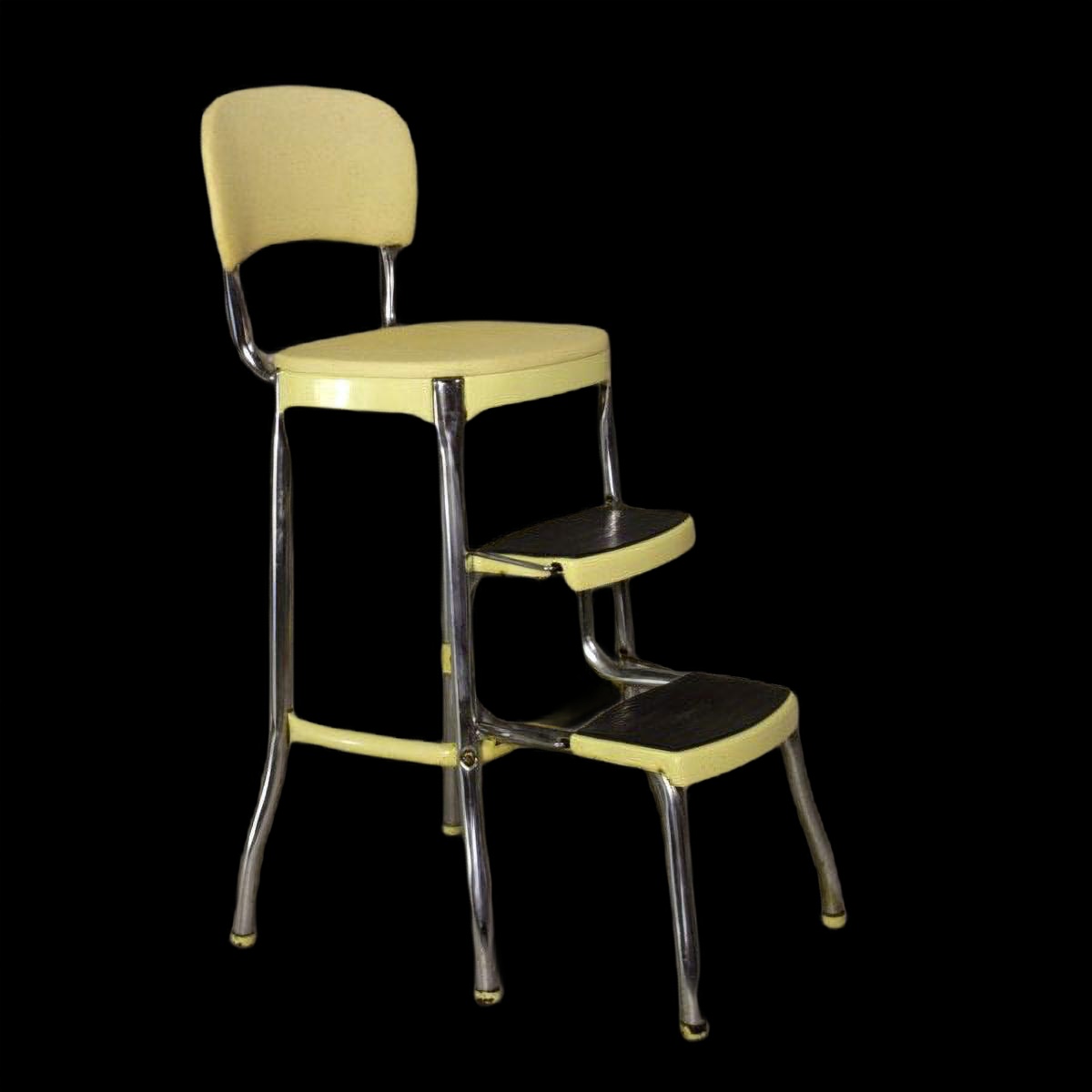
Everyone in the Vogrin family worked. For me, it started when I was able to stand atop a kitchen stepstool, hold a dish rag and wash dishes.
We didn’t have a dishwasher. As my mom used to say, she had four dishwashers and each had a name: Joey, Eddy, Billy and Jimmy. And we fought over who had to wash and who got to dry. If you didn’t help make dinner, or set the table, you were washing dishes.
That meant draining grease from the pan used to fry the main course into the grease tin, scraping leftovers into the empty half-gallon milk carton that would go out in the garbage once full, then filling the sink with soapy water and washing.

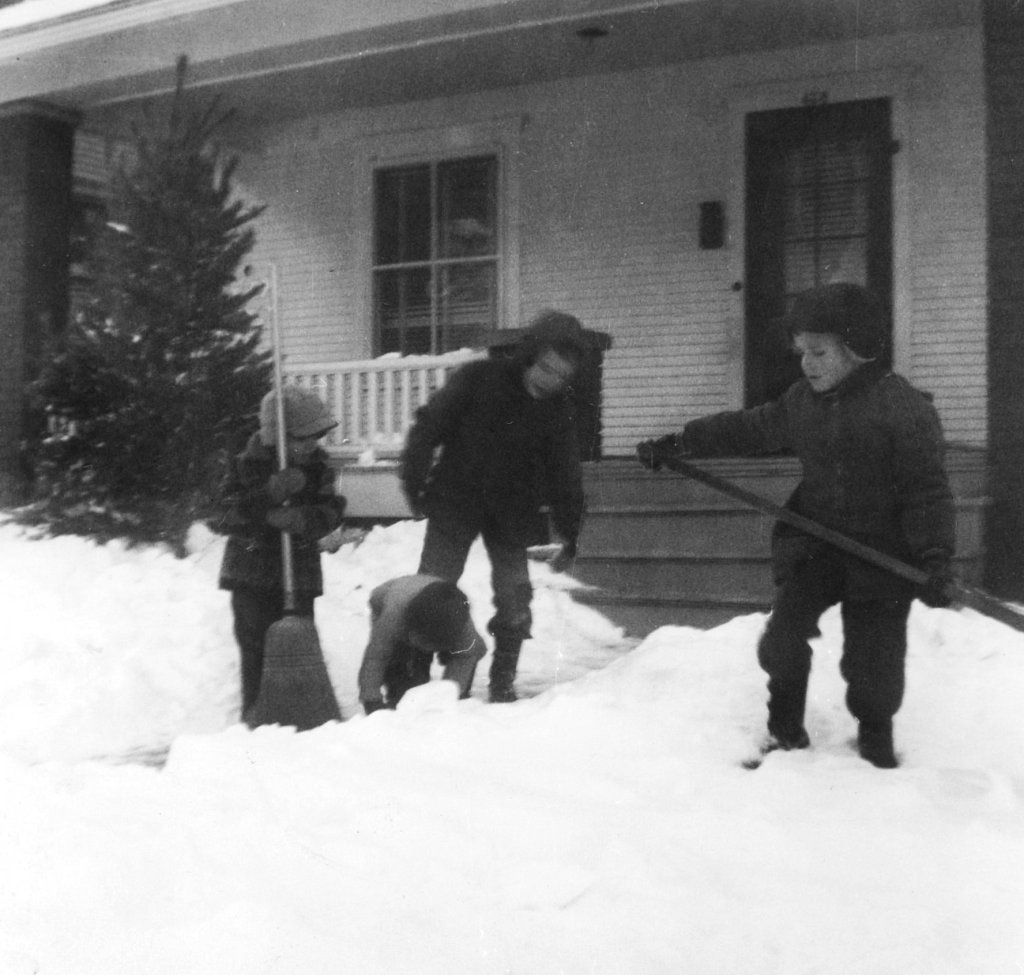
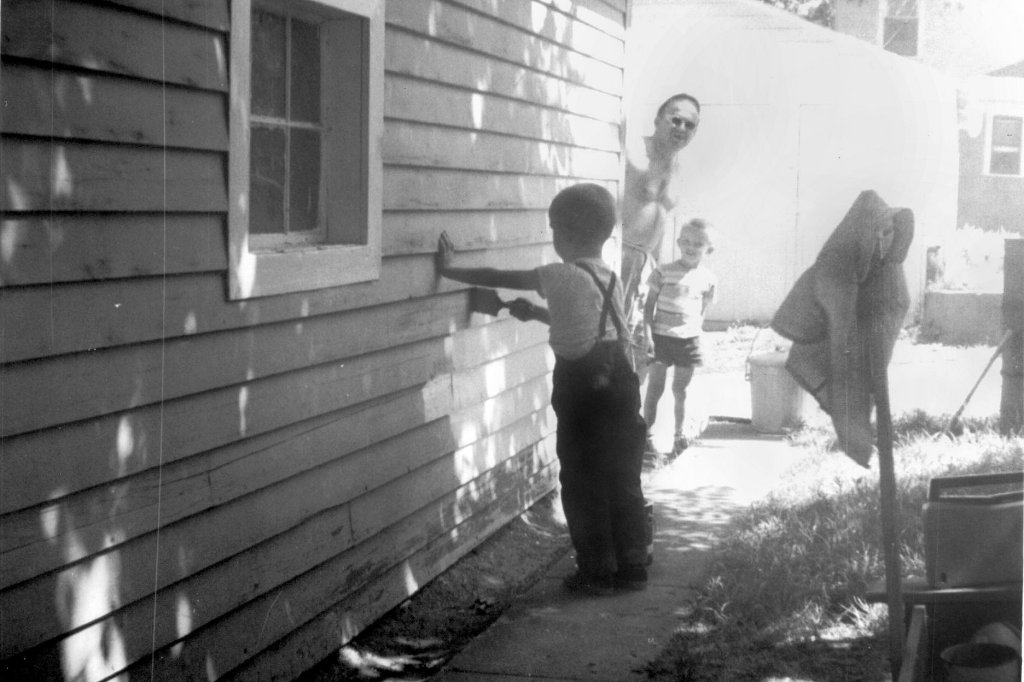
Other household chores that I shared with my brothers included cutting grass, shoveling snow, scrubbing toilets and taking out the trash to the old furnace that sat next to the alley behind our house and burning it each night. (It’s shocking to me to think that everyone had a fire barrel out back and routinely burned their trash! We never bagged leaves in the fall, either. We just burned them in the street or the alley. Crazy, eh?) We shoveled our sidewalk in the winter and we painted the house in summertime.
None of those chores, however, earned me money. And I never received an allowance. If I wanted money, I had to work outside the home. And that meant mowing grass and shoveling snow for neighbors. They weren’t lucrative jobs, but they earned enough for me to stop at Hoffman’s Grocery or the Confectionery a couple blocks away to buy candy like Pixie Stix or Bazooka Joe bubble gum or the like.
My pal, Joe Tomelleri, and I started a Saturday morning Uber Eats business. We’d take orders from the neighbors for doughnuts, then schlep down to the neighborhood bakery a few blocks north on 18th Street and drag a wagon loaded with the various orders back to 16th Street and deliver them.
My first serious job was delivering the Kansas City Kansan, an afternoon daily newspaper in my hometown. I delivered about 200 papers every day after school, rain or shine or snow. This lasted from about 6th grade into high school.

Delivering the paper was a natural outgrowth of my interest in newspapers, which no doubt stems from the fact I grew up surrounded by newspapers.
At our house, we followed what was happening on our radio and TV and in three daily newspapers delivered to the house – The Kansas City Times each morning and the Kansas City Star and the Kansan each afternoon.
I recall reading the sports page and the comics, mostly. Eventually I started reading the news. So I guess I followed my interests and got a job as a Kansan carrier.
Each afternoon a stack of papers, bound in twine, would be dropped on a corner near my house. I’d come home from Saint Peter’s Grade School, grab my canvas bags, one over each shoulder and criss-crossing across my chest, walk down to the corner and stuff the papers in the bags.
Then I’d head out to my paper route — stretching five blocks on 14th and 15th streets from Tauromee Avenue to Central Avenue — and start walking and rolling papers.
As I strolled down the middle of the street, I’d roll a paper, pull a spit-soaked rubber band from a wad stuffed in my cheeks, wrap the band around it a couple times and wing it onto the porch of a subscriber.
Early in the week when papers were thin — there was little advertising in the papers Monday through Wednesday — papers were easy to roll but harder to throw. Wind would cause them to sail. If I was careless, I’d end up chasing them down to get them on the porch. I learned quickly to wrap them very tight and give it the rubber band a third circle around. (I had to be careful not to pull too hard on the rubber bands or they’d snap, bringing a welt on my fingers and a swear word from my mouth!)
During freshman year in high school, I added a second route that included both home delivery and selling the paper door-to-door in Providence Hospital.
I actually knocked on doors and peeked inside, calling out “Kansan” to the poor patients!
During that time, I started to pay close attention to the headlines because patients and their families wanted to know if there was anything interesting in the paper to make it worth their 25 cents! I became sort of a town crier, hollering out the headlines to make a sale.
Did this experience sow the seeds of my career in journalism? I don’t know. I know I loved the newspapers, sports, comic strips and photography and that led me to become an avid reader of the Scouting magazine Boys’ Life, Sports Illustrated, the Sporting News, Mad magazine and others.

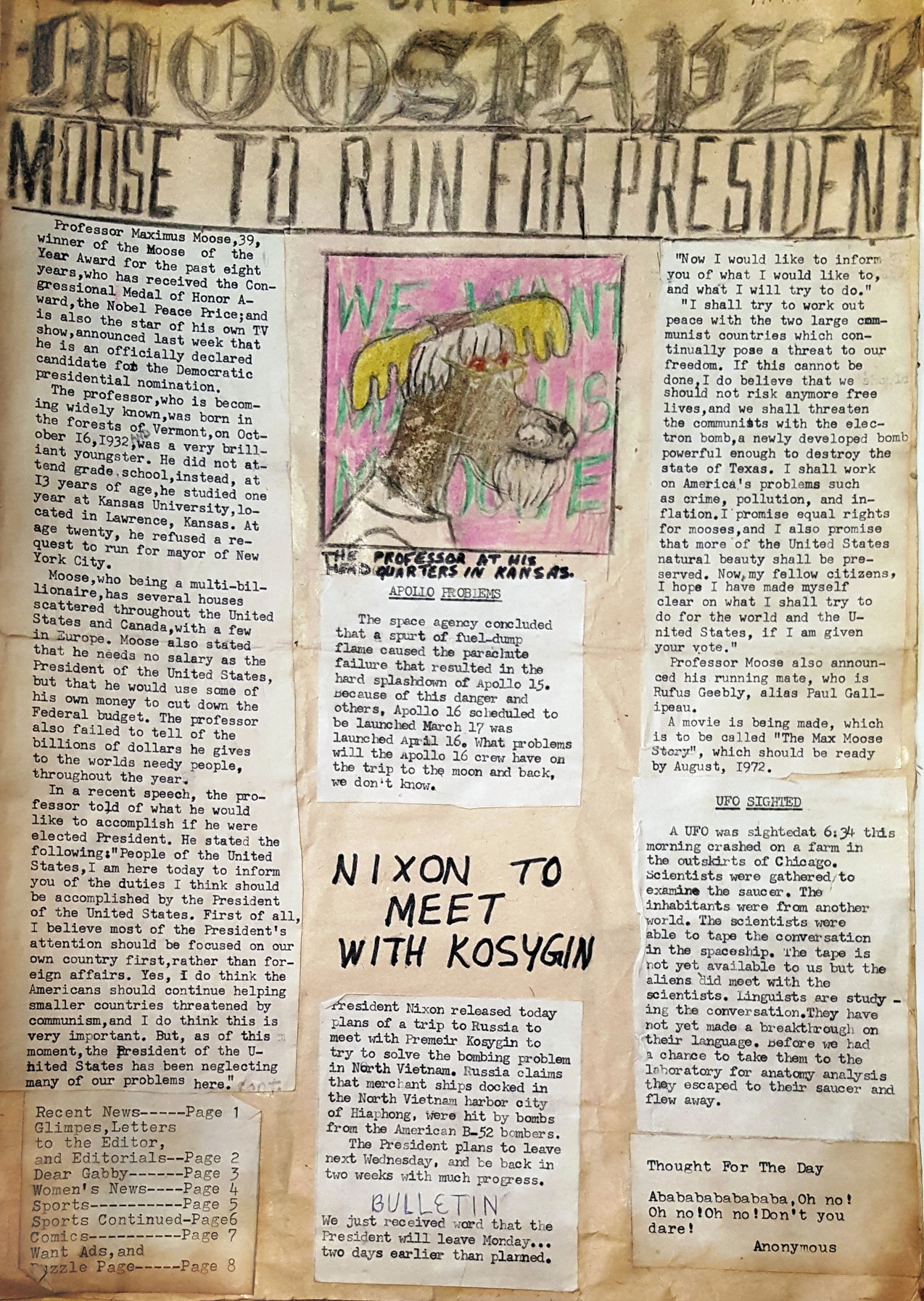
My buddy Joe T. and I created an eight-page “Moospaper” for an 8th grade school project and we published a newsletter that we distributed on 16th Street.
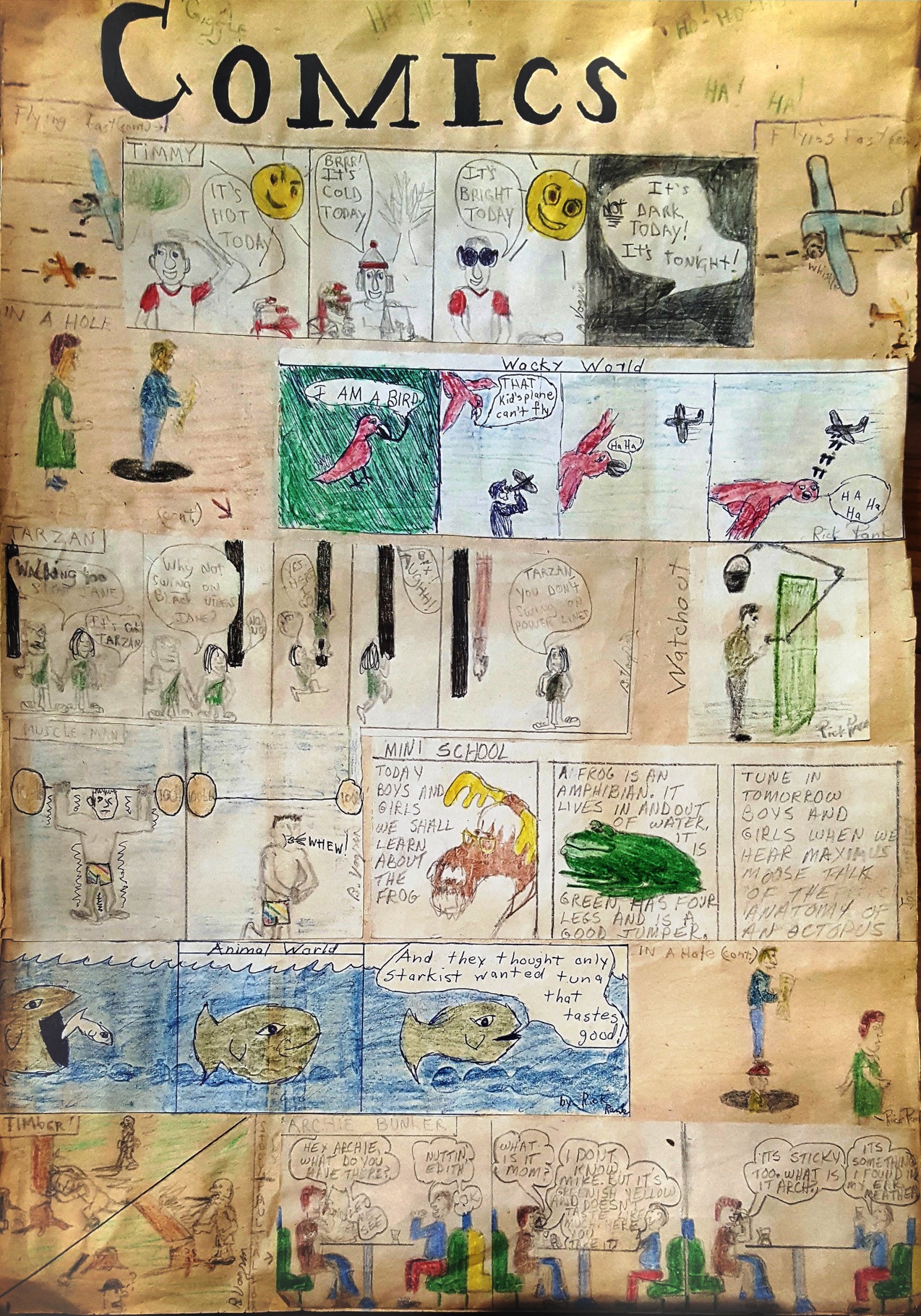
But I didn’t go to college to become a journalist. I went to college to escape Kansas City, Kan., and I had no idea what I might do with my life.
Growing up, my only goals were to play basketball for the Kansas Jayhawks, play the outfield for the Kansas City Royals and become a wide receiver for the Kansas City Chiefs. All at the same time. (This was well before Bo Jackson made such dreams reality.)
The beauty of college, besides getting away from home, was the freedom to explore different disciplines that might actually lead to a paycheck someday. I already knew science was never going to happen. So I took art classes, English, history, photography and more.
I loved art — my pal Joe T. and I had taken art classes from his aunt and in high school, created an animated movie “Unbearably Embarrassed” for our senior class project and fallen in love with animation.
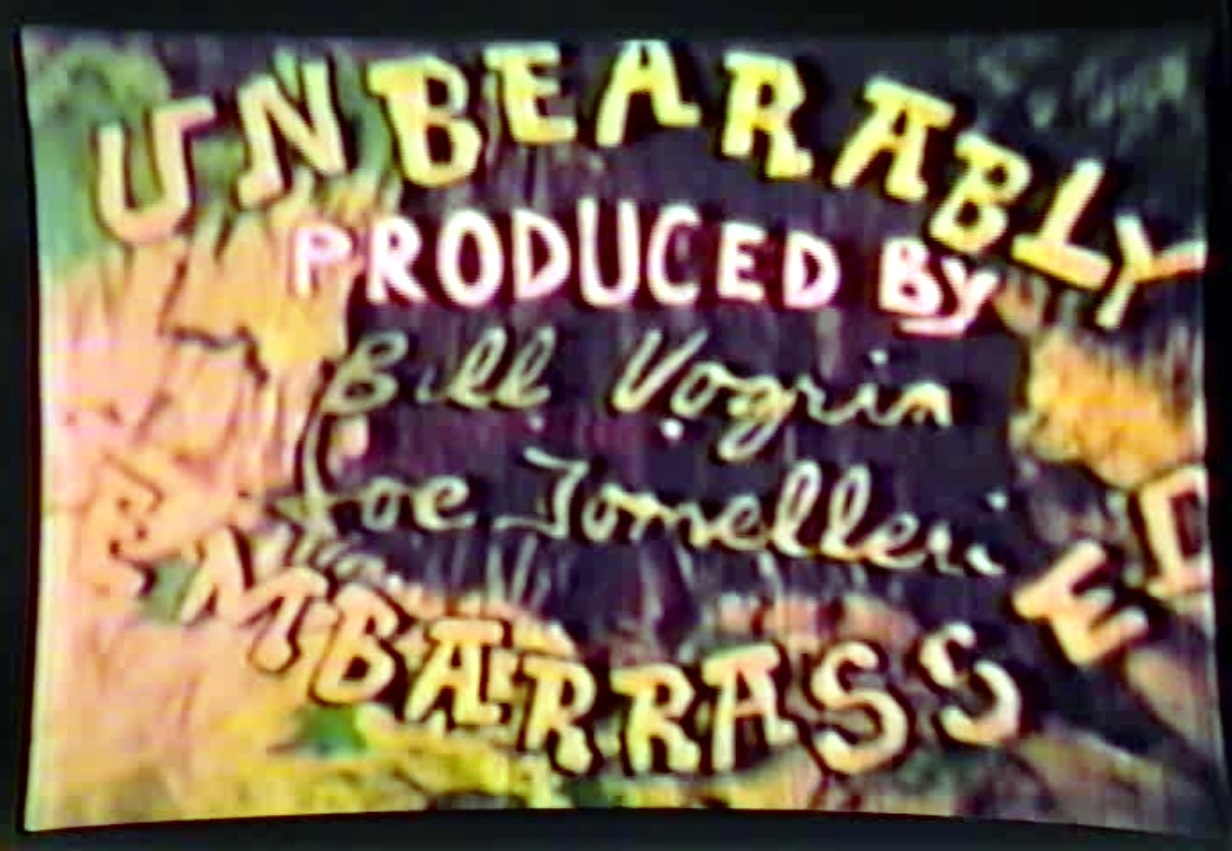
But I struggled to see it as a career. (Joe would later prove me wrong, as he became a world-renowned fish artist.)
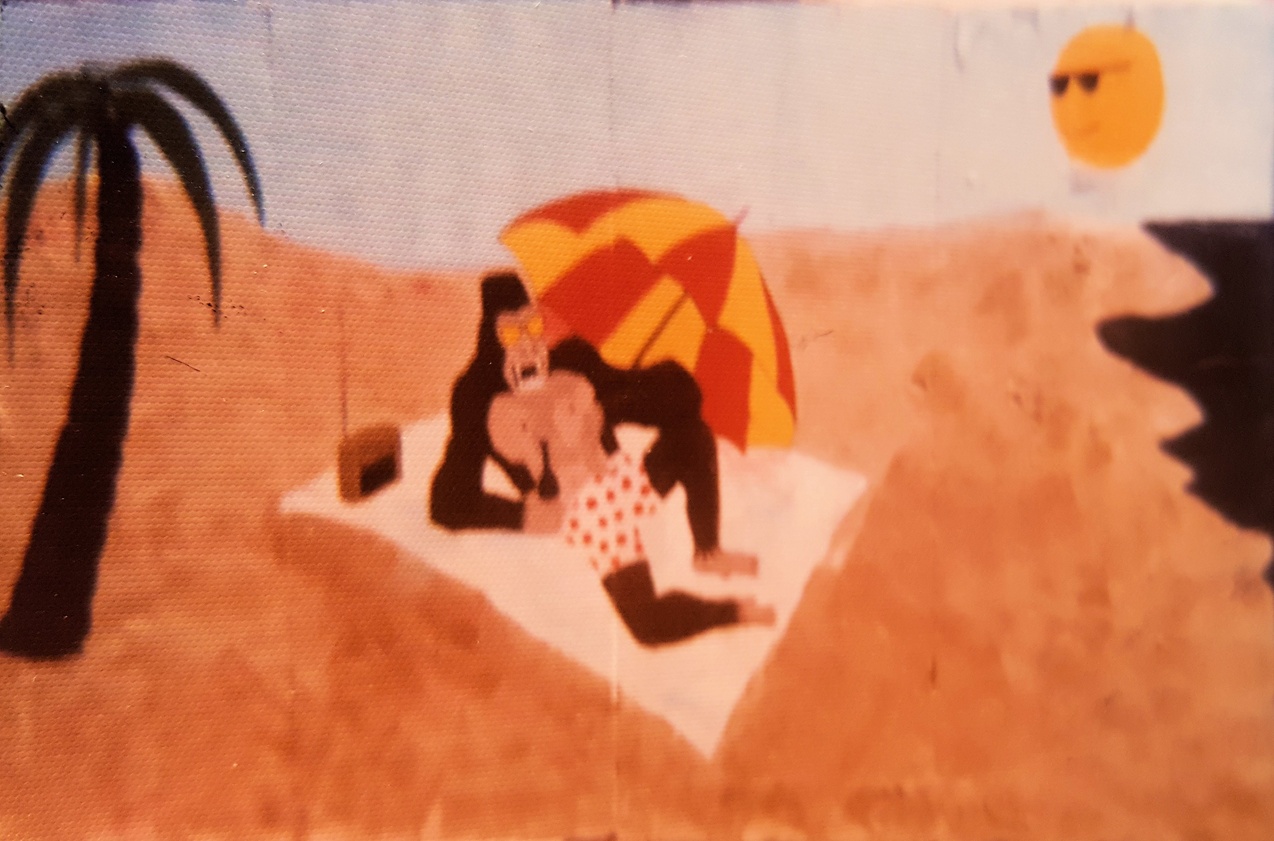
Here’s an example of my limited art skills in college … I painted Gus Gorilla on a section of privacy fence as part of a contest at Pittsburg State.
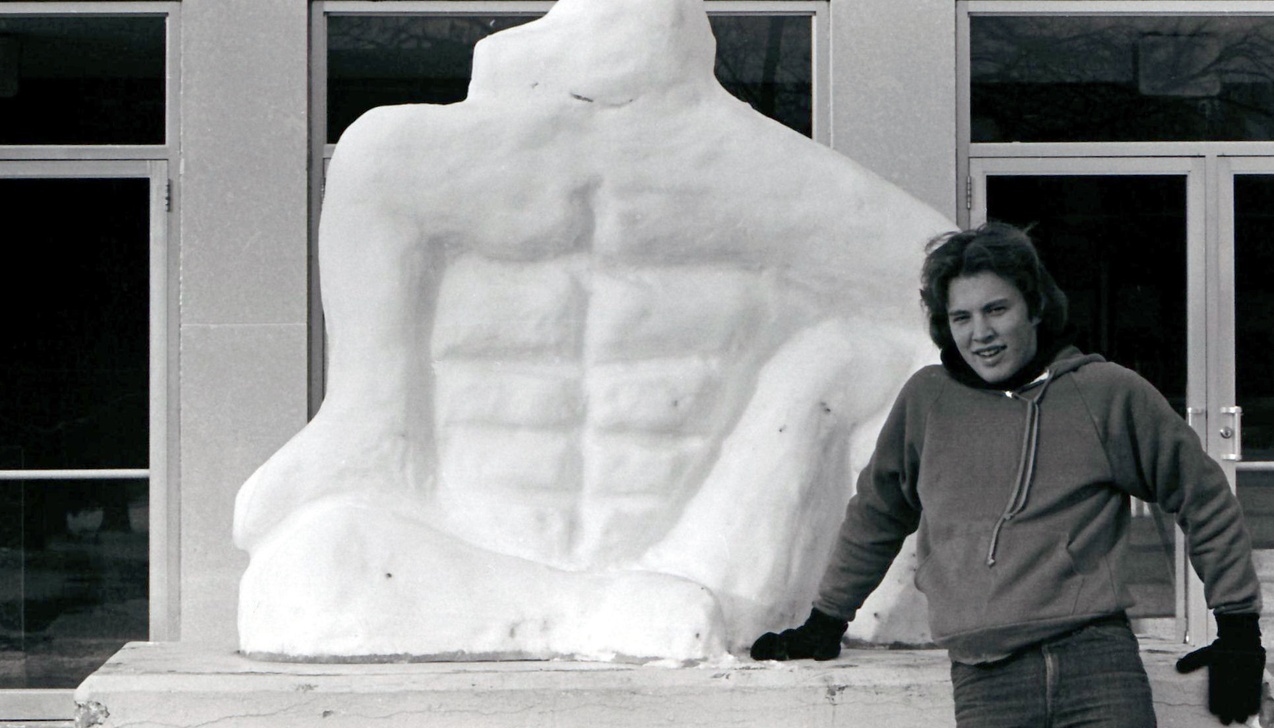
Maybe I should have been a sculptor. Here’s a snow version of a Gus statue I created my freshman year.
Anyway, I found I loved photography. But I didn’t care for all the chemicals and drudgery of developing film. Plus, a lot of people were good photographers.
It was a writing class where I found I excelled. A teacher encouraged me so I took a class in journalism and I applied for a reporting job with the weekly Pitt State Collegio student paper.
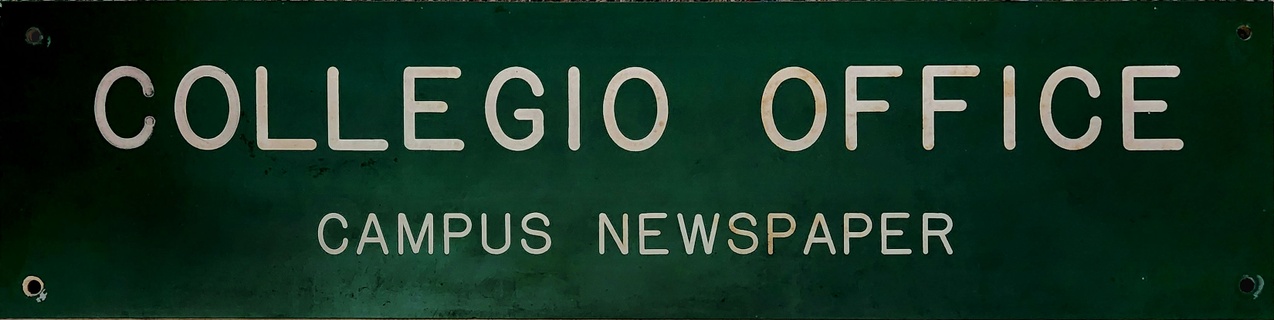
Almost immediately I found my home. I loved writing stories, and journalism allowed me to follow my passion for sports. I was able to take photos for the paper, as well. I loved seeing my words and photos in print.
To make some money on the side, I became an assistant sports information director for Pitt State. I wrote programs for football and basketball games, news releases before and after games and features on players and coaches. I loved the access my work gave me to the athletes, and I knew what I wanted to be when I graduated.
The only problem was that Pitt State did not have a school of journalism. Just a journalism teacher, Dr. Knowles. To have the best shot at a deep education and a job at a big newspaper upon graduation, I knew I had to go to a major university. And that meant transferring to my beloved University of Kansas where I’d finally become a true Jayhawk.
KU was home to The Daily Kansan. Yes, KU produced a daily newspaper! And with a daily circulation of 15,000 papers, it was among the largest daily newspapers in the state! The Kansan was also highly decorated as among the best college papers in the nation.
It was the big leagues. I admit I was scared. But I had a good friend, Carol Beier, already studying at KU’s William Allen White School of Journalism and working at the Kansan. She assured me I would have no problem. So I made the leap to Lawrence and never regretted it.
At KU my professors were people like “Uncle Rick” Musser (a great teacher) and Suzanne Shaw (a tough editor), and former journalists from major newspapers like Tom Eblen, managing editor of the Kansas City Star. I was pushed by fellow students like Carol, Grant Overstake, Bill Menezes and others.
Most important, major news organizations came to KU to recruit young journalists, and they relied on the opinions of the professors. That’s how I ended up working for The Associated Press, starting the day after graduation.
Tom Eblen was friends with Fred Moen, the AP bureau chief in Kansas City. Tom recommended Fred give me an interview. Next thing I knew, I was driving to KC to take the AP test. It was a combination aptitude test, writing and quiz on the AP Stylebook. Fred later told me I scored the highest they’d ever seen in KC.
I was hired. And talk about the big leagues. In journalism, it didn’t get any bigger than The AP.


I worked for The AP in Kansas City until December 1981 when I transferred to Topeka to cover state government. There I met my mentor, Lew Ferguson, who taught me more about journalism and life than anyone ever before or since. He was an amazing man and friend.
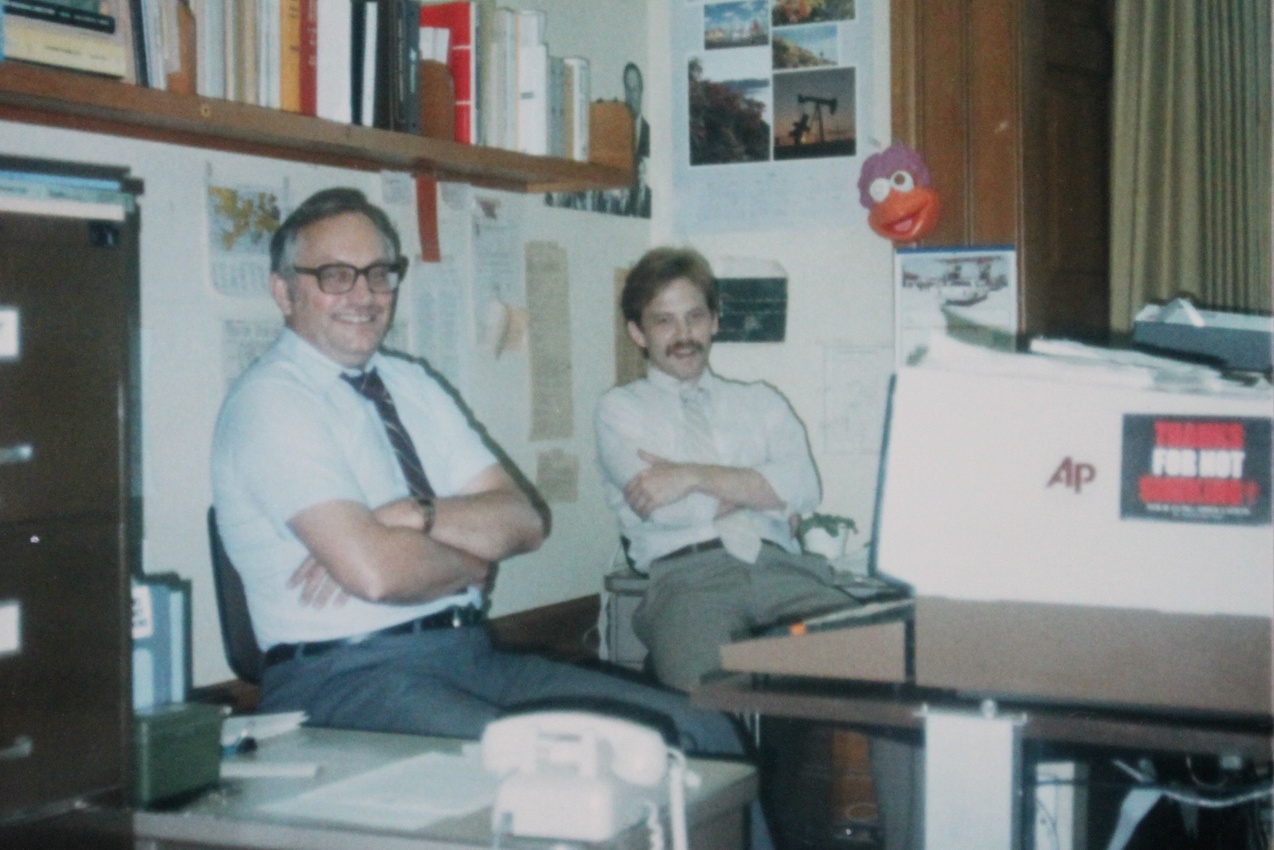
In 1987, I transferred to Illinois where I became a roving correspondent based in Peoria and reporting to the Chicago bureau. Chicago represented the really big leagues!
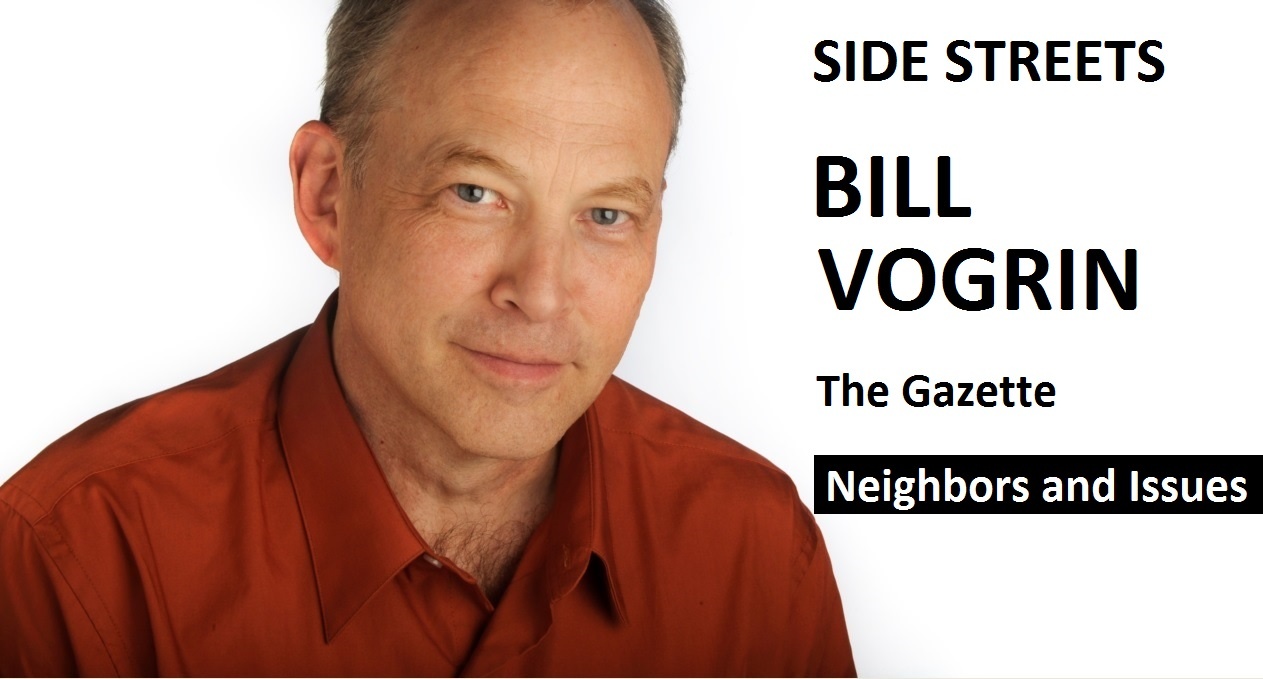
Hoping to achieve a better work/life balance, I left the AP in 1994 and took a job with The Gazette in Colorado Springs. There I was a business reporter, interim business editor, City Editor and finally, for the final 13 years of my time there, the featured metro columnist writing Side Streets featured three days a week.
In 2015, I left the Gazette and we bought the Tri-Lakes Tribune and the Pikes Peak Courier, weekly newspapers serving Monument and Woodland Park. I only owned them about 18 months before the Gazette bought them.
My journalism career ended with a byline story in the New York Times! What a way to end a career. That’s like hitting a walk-off grand slam in the bottom of the ninth inning of the World Series. Boom!
For my final act, I became Public Information Officer for Colorado Parks and Wildlife where I again used my photography skills and writing abilities to tell the story of the agency. I still consider myself a journalist. I call myself the conscience of the agency.
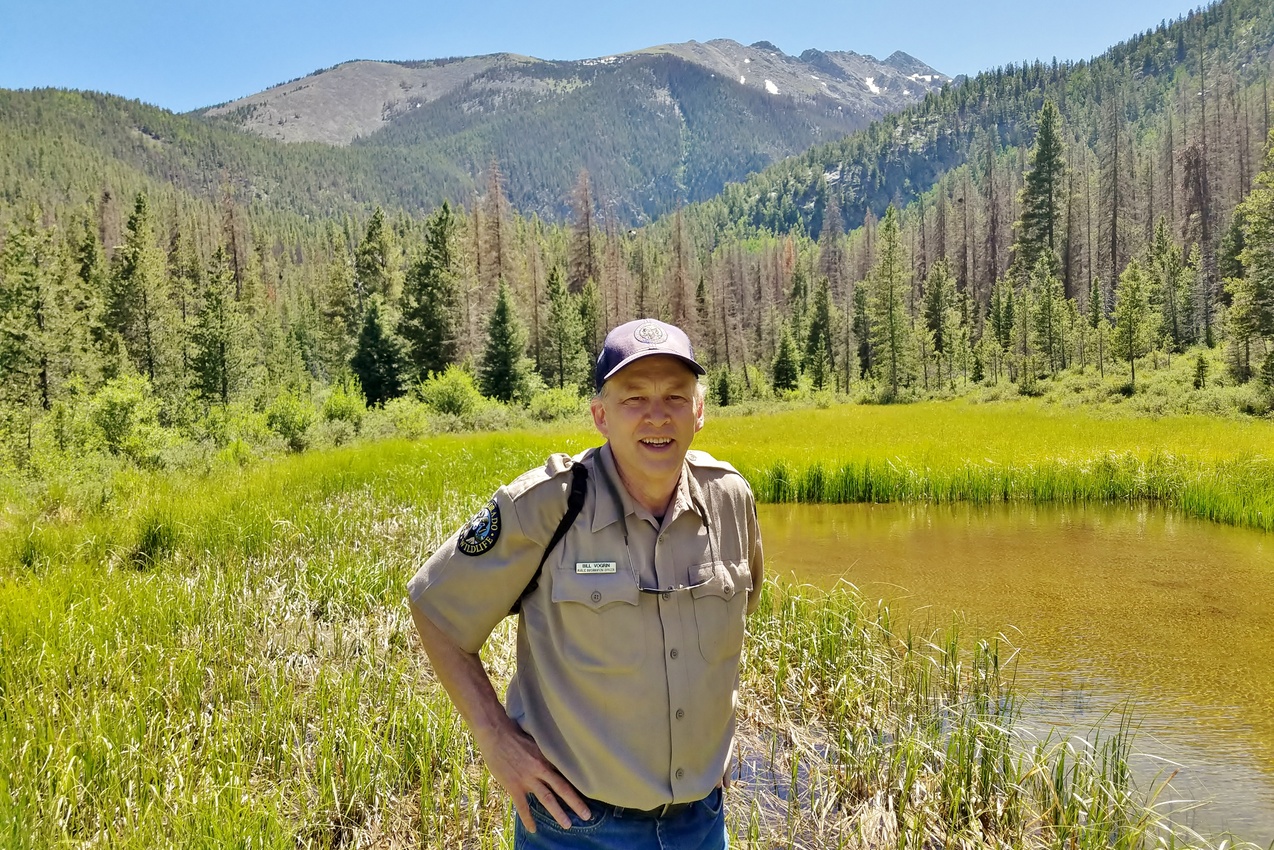
It’s been quite a journey and a rewarding one. I’m still working long after many friends and colleagues have retired. For me, the difference is that I love what I am doing. It hasn’t always been great. There were terrible years when newspapers began to collapse and I worried how I’d survive.
But I remained open to new possibilities, like the PIO role with CPW, and I was never afraid of hard work because that’s all I’ve ever known. And I’ve been lucky.
I have had a blast and learned that following your passion was the key to a long and happy career.
Bill Vogrin, March 11, 2023
 Bill Vogrin